EDUCATIONEVENTSMUSICPRINTINGPUBLISHINGPUBLICATIONSRADIOTELEVISIONWELFARECAREER
INDIA TODAY - The most widely read newsweekly in South Asia.
CURRENT ISSUE  
ARCHIVE  


INDIA TODAY - The most widely read newsweekly in South Asia.
      CURRENT ISSUE JUNE 13, 2005
 
     SOCIETY & THE ARTS: BOOKS
 
Correcting Columbus

A hotshot columnist celebrates the third stage of globalisation. Is he too dazzled by the digital?
 
THE WORLD IS FLAT: A BRIEF HISTORY OF THE GLOBALIZED WORLD IN THE 21ST CENTURY
By Thomas L. Friedman
Allen Lane; Price: £13.50 Pages: 488

Twice every week on the op-ed pages of The New York Times, Thomas Friedman reduces the world to 800 words. It may be a nasty world where the missile-borne morality of the new imperium is at war with the Book-marked fury of the fanatic. It may be a world where the ideas of freedom come dressed as suicide bombers, queuing up outside the neighbourhood bus stop, for a one-way ticket to paradise. It may be a world where the imagination of the techie is counterbalanced by the paranoia of the terrorist. It is a world where identity, aspiration and anger continue to co-author the national text. This world shrinks at the click of a mouse. This world's unifying dharma is digital. Too much Baghdad? Try Bangalore. No frontier is infallible. It is a world where the movement of history is so fast that bookshelves are swelling with prophecies and panaceas. Thankfully, there is Friedman to make this world in a whirl accessible-and comprehensible-to readers of the liberal media's holiest pages. He is no pundit of high concepts. He is no columnist of stylistic refinement either. Still, he is one of the most influential columnists of America. He is the connoisseur of common sense and the cheerleader of globalisation, travelling the world like Marco Polo with a notepad.

  PICTURE SPEAK
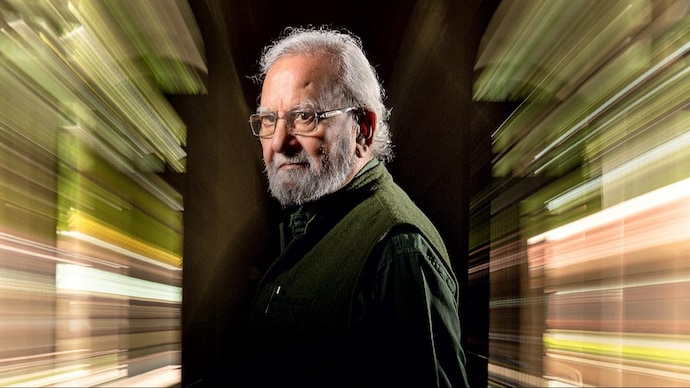
THE CHEERLEADER OF GLOBALISATION: Friedman

He has his road-to-Damascus moment when, one day in the suburb of Bangalore, Infosys' Nandan Nilekani tells him, "Tom, the playing field is being levelled." Tom, enlightened, wonders: "What Nandan is saying, I thought, is that the playing field is being flattened.... Flattened? Flattened? My God, he's telling me the world is flat!" Good journalist that he is, Friedman scribbled it down in his notebook: the world is flat. And a book is born, in many ways a sequel to The Lexus and the Olive Tree (1999), his best-selling account of the tension between globalisation and nationalism. "This flattening had been taking place while I was sleeping, and I had missed it." He was too wakeful to realise it, for 9/11 changed the world-and it changed the work schedule of a columnist of foreign affairs. The "olive groves" of Baghdad and Kabul were too demanding. He was too busy chasing Osama bin Laden to meet up with Jerry Rao, whose company in Bangalore does the tax returns for several thousands of Americans. Suddenly, the world is only as big-or small-as your computer screen.

This flat world, Friedman tells us, marks the third stage of globalisation. Globalisation 1.0 began with Columbus' journey in 1492 and lasted till 1800, and the agent of change then was physical power. In Globalisation 2.0, from 1800 to 2000, the driving force was multinational companies. In the current age of Globalisation 3.0, the defining force is the individual: "the lever that is enabling individuals and groups to go global so easily and so seamlessly is not horsepower, and not hardware, but software". Friedman, excited by this great discovery (Columbus, shame on you!), moves from boardrooms to video-conference halls and call centres to paraphrase the many wonders of the brave flat world, and to list the forces, 10 to be precise, that flattened the globe. 11/9 is flattener No. 1. (On November 9, 1989, when the Berlin Wall came down, "the windows went up".) In 1995, Netscape went public, another revolutionary moment. And the combined force of work flow, outsourcing, offshoring, open-sourcing, insourcing, supply chaining and digital steroids completed the work. A grand interplay of companies, customers and communities, and Friedman is mesmerised. Technology shall save the world, and Friedman is an optimist who abhors questions.

Questions like: aren't the instincts of the individual neutralised by the fears of the government? Aren't there, beyond the sprawling supermarkets, some of the most protected prisons, more nationally distinctive than Guantanamo? Hasn't the Wall returned to the mind, heralding a globalisation of the ghettos? Freedom is still a disputed idea in many parts of the flattened world, in spite of the first stirrings of an Arabian Spring. Friedman, though, has convinced himself that he is the lone witness to the grand march of history. Remember the one who sighted the cadaver of history in the high street of market liberalism? That was post-Soviet triumphalism, and old ghosts of nationalism would step out of the basement of freedom to ridicule him. Then a venerable professor felt it was a vindication of his theory on the clash of civilisations. The first full-scale war of the 21st century was necessitated by the rage against civilisation. And to both writers, the chosen audience was the White House. Friedman is not in the same league. The three-time Pulitzer winner is making sense of what the late George F. Kennan called the "history of the present". But the author of From Beirut to Jerusalem: One Man's Middle Eastern Odyssey, a marvellous mix of reportage, memory and history, is hardly visible here. The world may not be beguilingly flat, but this book is.

Previous Story

Next Story


Index

INDIA TODAY - The most widely read newsweekly in South Asia.
CURRENT ISSUE
JUNE 13, 2005
 IN THIS ISSUE
COVER STORY

TOP 10 COLLEGES OF INDIA

OTHER STORIES
 

ARTS

SCIENCE

COMMERCE

MEDICINE

ENGINEERING

LAW

Ready Reckoner

India's Best Business Schools

World's Best Business schools

Where East Meets West

Blast From The Past

The Guns Fall Silent

Cross-border Traffic

Hero Turns Villain

Correcting Columbus

Relative Clause

Rock Rush

Tipu's Treasures


Do you think the visit to Pakistan by the Hurriyat leaders will impact the peace process between India and Pakistan?
 
South Asia's most influential and most read newsweekly presents the fourth Conclave India Tomorrow 2005 : Perception vs Reality


CONTACTUS SYNDICATIONSSUBSCRIPTIONFAQsPRIVACYPOLICY