EDUCATIONEVENTSMUSICPRINTINGPUBLISHINGPUBLICATIONSRADIOTELEVISIONWELFARECAREER
INDIA TODAY - The most widely read newsweekly in South Asia.
CURRENT ISSUE  
ARCHIVE  


INDIA TODAY - The most widely read newsweekly in South Asia.
    CURRENT ISSUE OCTOBER 17, 2005
 
   COVER STORY: STEM CELL BANKS
 
Banking On Wonde Rcells

Cord stem cell banks are fast becoming the latest means to defend against debilitating diseases like leukaemia and thalassemia. But it is still unchartered territory.
 
 
  PICTURE SPEAK
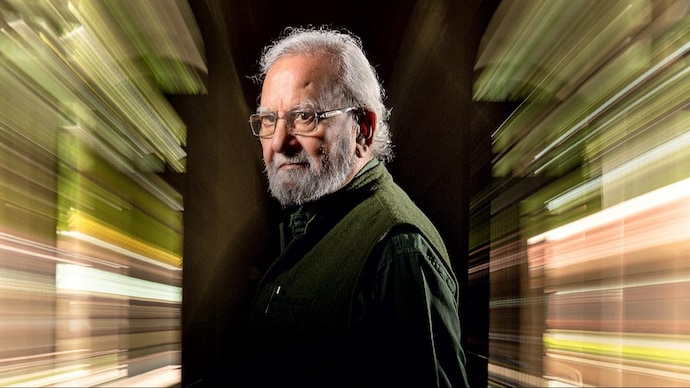
Abhaya Kumar at his Chennai lab

When actor Raveena Tandon was expecting her first child early this year, she opted to preserve the blood from the umbilical cord as an insurance against illnesses like leukaemia and thalassemia. Just weeks before she was to give birth, Tandon opened a bank account for her baby, albeit with a difference. This one stores blood from the umbilical cord and placenta for years.

In a bid to protect their children from blood-related disorders, a growing number of parents like Tandon are opting to preserve the precious stem cells found in the cord blood for a cost of Rs 60,000. Many private healthcare companies like Reliance Life Sciences (RLS), Life Cell and Cryo Stemcell are falling over each other to offer this service to parents who have the cash to store an important biological substance of their baby. They call it biological insurance. Mothers who wish to preserve the cord blood have to register two months before the expected date of delivery.

Once the umbilical cord is cut, the blood is collected in a syringe containing anticoagulents or drained into a bag. Then the platelets and the red blood cells are removed so that the remaining plasma will be one rich in stem cells, the building blocks of the many cells that make up the human body. Crucially, they also have regenerative properties. After harvesting, the stem cell-rich blood is stored in 25 ml vials under liquid nitrogen in a computer-controlled bioarchive system where temperature is maintained at minus 196 degrees Celsius.

Life Cell, which is collaborating with the US-based Cryo-Cell International, is trying to popularise the benefits of stem cells. Says Asia Cryo-Cell's CEO and Vice-Chairman Abhaya Kumar: "Stem cells can be used to cure about 70 life-threatening diseases. These can be used for treating the person and even his immediate family."

HOW THE CELLS ARE USED TO STEM ILLNESSES
When a baby is born, the cord blood is drained and the stem cell-rich plasma stored in vials.

The umbilical cord blood is rich in stem cells and harvesting them is the least controversial.

The blood stored in 25 ml canisters will be kept frozen using liquid nitrogen and the temperature will be maintained at minus 196 degree Celsius. In the future, these stem cells can be used to cure several diseases.

The cells pitch is working. The response to cord stem cell banks is growing, says Dr Duru Shah, president-elect of the Federation of Obstetric and Gynaecological Societies of India. "It is a good opportunity if you can afford it," he adds. Life Cell charges Rs 27,000 as enrolment and processing fees and thereafter the bank charges Rs 2,900 every year as storage cost.

So is cord blood banking just a trend among affluent, anxious parents or is it truly a miracle of science that promises deliverance from dreaded diseases? Apart from bone marrow, blood stream and other organs in an adult human being, stem cells are found in foetal tissues and human embryos but embryonic stem cell research is entangled in several ethical issues.

Commenting on the growing popularity of cord blood banks and stem cell therapies, Dr Chander Puri, director, National Institute for Research in Reproductive Health, Mumbai, says stem cells could transform the way medicine is practised "but their use is limited today". There are warning signals. Experts point out that it is not conclusively proved that a child can be administered its own stem cells when blood-related disorders occur later in his life since the blood may contain the same malignant strains.

Cord blood banks like RLS are also collecting cord blood from voluntary donor mothers to provide stem cell matches to unrelated patients. This is called public banking of cord blood. RLS is the only public repository in south Asia.

CASE STUDY

When actor Raveena Tandon was expecting her first child she registered with a cord stem cell bank and later got the blood from the umbilical cord stored.

A patient who wants a stem cell graft should obtain the Human Leukocyte Antigen (HLA) profile through molecular methods and submit the data to RLS. This data can be submitted either on the Web or to an authorised representative of the institute. RLS also facilitates HLA typing. The HLA Match Query Module will search the database and report the matches.

While cord blood is a good source of stem cells and can be used as an alternative to marrow transplants, the medical fraternity is concerned about the manner in which private cord blood banks are playing on the sentiment of the parents by calling it biological insurance. Keeping in mind the ethical issues pertaining to stem cell research, the Indian Council of Medical Research (ICMR) has come up with a set of guidelines on experiments and therapy. Dr Vasantha Muthuswamy of ICMR says, "Except in blood-related disorders and malignancy, there is not much clarity on the application of stem cells. The way the private banks are luring people to store cells is not right."

While it is difficult to predict how far the boundaries of science can be pushed, as of today, families with a history of blood-related disorders can bank on stem cells. But for others they are still not a panacea for all ills.

 RELATED STORIES
Road To Recovery New Pot of Gold


Previous Story

Next Story

INDIA TODAY - The most widely read newsweekly in South Asia.
CURRENT ISSUE
OCTOBER 17, 2005
 IN THIS ISSUE
COVER STORY

Twin Hopes

OTHER STORIES
 

Banking on Wonder Cells

Singular Achievement

First Among Equals

Uniform Demand

Favouritism at Play

Hostage To Anarchy

Sweet Returns

Damage Control

The New Tibet

The Dalai Dilemma

Enriching Agreement

Leaking Ship

High Speed, Low Cost
Making Markets Safe
Babes With The Woods
Adding To The Mix

Romancing The Ghats

Anatomy of Desire

Lights, Camera, Playtime
Hollywood Dreaming


Do you agree with the CPI(M) allegation that India buckled under US pressure on the Iran vote?
 
South Asia's most influential and most read newsweekly presents the fourth Conclave India Tomorrow 2005 : Perception vs Reality


CONTACTUS SYNDICATIONSSUBSCRIPTIONFAQsPRIVACYPOLICY