EDUCATIONEVENTSMUSICPRINTINGPUBLISHINGPUBLICATIONSRADIOTELEVISIONWELFARECAREER
INDIA TODAY - The most widely read newsweekly in South Asia.
CURRENT ISSUE  
ARCHIVE  


INDIA TODAY - The most widely read newsweekly in South Asia.
    CURRENT ISSUE DECEMBER 19, 2005
 
    SOCIETY & THE ARTS: BOOKS
 
Memories Of Taste

Madhur Jaffrey's delicately shaded memoirs bring out the joys and heartbreak of a joint family
 
CLIMBING THE MANGO TREES: A MEMOIR OF A CHILDHOOD IN INDIA
By Madhur Jaffrey
Random House (Ebury Press)

Price: Rs 600 Pages: 264

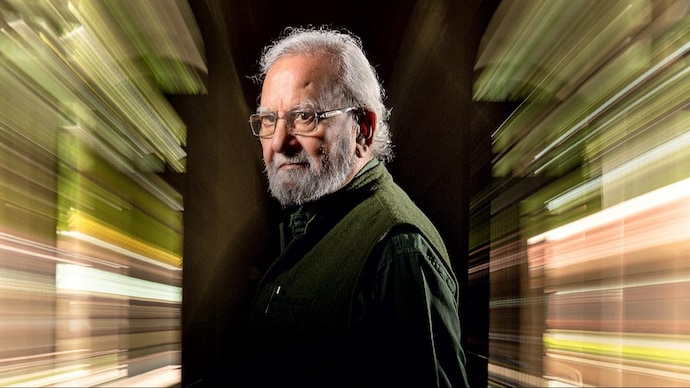
Actor, cook and story-teller: if she was playing one role less Madhur Jaffrey wouldn't be who she is and we would have to suffer indigestible meals and books. For more than 30 years she has made a virtue out of running three parallel careers-when one flagged, the other took off-so she may have helped give the phrase "multi-tasking" some of its current resonance. Fifteen bestsellers on Indian food and numberless articles and TV series, she is also best remembered for her performances in Merchant Ivory films.

  PICTURE SPEAK
CHILDHOOD JOYS: Jaffery's memoirs are rich and evocative but not rose-tinted

It may be the bad luck of an interpreter of recipes but she showed no early aptitude for cooking. One amusing story she tells here is of the fear of maths that gripped her before her high school finals; yet it was not arithmetic that proved her undoing but domestic science. Presented with ingredients, candidates were asked to produce aloo curry: "I cut up everything I found-potatoes, onion, garlic, tomatoes, chillies and green coriander... and threw them into a pot with a little water. I sprinkled a few spices and salt over the top... as I couldn't bear to look at my bubbling creation, and prayed."

It was a disaster. Years later in New York she helped her dying friend, culinary maestro James Beard, take his last cookery classes. These were no juvenile aloo curry tests. Students were made to taste nine different types of caviar, a variety of olive oils, and do a blind identification of meats with the fat removed. The question arose: Does taste have a memory? It is a question, she says, that made her embark on this delicately-shaded memoir of Delhi and provincial Indian towns of the 1940s and 50s.

It is suffused with the smells, tastes and sensory delights, both simple and complex, of a way of life that has gone forever-goings-on in the bari kothi and a vast extended family whose picnics to Qutab Minar in the 1920s included a clan of up to 300; even in her childhood, 30 to 40 of the joint family ate together, under the patrician hookah-smoking gaze of her barrister grandfather Raj Narain. ("If we passed him before dinner in the drawing room) he would dip a finger in his glass of whisky and give us a lick. We were known to queue up for these licks.")

Madhur Bahadur (as she was known before her first marriage to actor Saeed Jaffrey) comes from an old kayastha family that, through shrewd political management, allied with many of Delhi's rulers-from Mughal emperors to colonial oligarchs-and prospered. Moving from the old walled city, her grandfather bought an orchard estate in an area today bound by Maiden's Hotel and the River Jumna. Here she grew up in a series of quasi-Lutyen's bungalows where "his numerous grandchildren, like flocks of hungry birds, attacked the mangoes while they were still green and sour". (Raj Narain Marg still exists, though the estate is much disfigured by modern building).

The merit of Madhur Jaffrey's memoir is that it isn't all rose-tinted views, la vie nostalgie. Like a seasoned performer-through hint, suggestion and humorous recounting-she takes you into the dissension, heartbreak and tragedy of a joint family. A young cousin dies of rabies; a captivating uncle raises the poisoned chalice; the compelling and powerful prey upon the inarticulate and weak. It brings to mind Yeats's verse: "Things fall apart, the centre cannot hold... and everywhere the ceremony of innocence is drowned."

This book brings Madhur Jaffrey up to her college years. Let's hope there will be more volumes from a rich life. Meanwhile, some of the recipes are extinct. She describes a dish called daulat-ki-chaat (called shabnam where I grew up) that a woman in white brought on freezing winter mornings. It was made by laying milk and dried sea foam in terracotta cups on terraces overnight; the morning dew created a frothy "ambrosia... that disappeared as it touched the tongue".

It is imperative reading for future generations, if only to know what the taste of a rapidly-vanishing India was.


Previous Page

Next Page


Index

INDIA TODAY - The most widely read newsweekly in South Asia.
CURRENT ISSUE
DECEMBER 12, 2005
 IN THIS ISSUE
COVER STORY

Black Money Boom

OTHER STORIES
 

Without Fear Or Favour

Cracking Natwar

The Party Is Withering Away

Seeds Of Doom

Landing In Trouble

Whose Water Is It Anyway?

New Signals

Harrier Hassles

Troubled Course

A Century Of History

Red Tape in Red Fort

Weekend Couples

No Child's Play

Past Forward

Memories Of Taste

Breaking the Taboo

Split Down The Middle


What should be the priorities of the new Bihar Government headed by Nitish Kumar?
 
South Asia's most influential and most read newsweekly presents the fourth Conclave India Tomorrow 2005 : Perception vs Reality


CONTACTUS SYNDICATIONSSUBSCRIPTIONFAQsPRIVACYPOLICY