EDUCATIONEVENTSMUSICPRINTINGPUBLISHINGPUBLICATIONSRADIOTELEVISIONWELFARECAREER
INDIA TODAY - The most widely read newsweekly in South Asia.
CURRENT ISSUE  


INDIA TODAY - The most widely read newsweekly in South Asia.
     CURRENT ISSUE JULY 10, 2006
 
     DIPLOMACY: INDO-US NUKE DEAL
 
Crossing A Big Hurdle

With the Bush Administration's success in rallying bi-partisan support for the Indo-US nuclear deal in the House International Relations Committee, India could expect a smoother ride
 
  PICTURE SPEAK
BIG DEAL: The ratification of the pact by the US Congress underway
In the end, barring the most strident critics, there were no unpleasant surprises and the ayes in the House International Relations Committee claimed the proposal to exempt, as a special case, the United States-India civilian nuclear cooperative agreement from prohibitions of American law. It is expected that the administration's political will will eventually prevail in the Senate too, where Senators have not been very forthcoming on the issue. No doubt the overwhelming support (37 for and five against) from the House Committee should provide just about the right momentum and swing crucial yes votes. This would bring President George Bush's administration just a step away-when the full House and Senate vote on the resolution-from obtaining legislative approval for the historic deal with India.

Going into the committee voting, the Bush Administration exhibited confident body language, especially after it fielded Vice-President Dick Cheney to bat for the deal at the annual session of the US India Business Council in Washington DC last week. With American business ranged behind it, the administration was able to make a strong economic argument for legislative endorsement of the deal.

DEEP IMPACT
MONEY MATTERS: With US business behind it, the Bush Administration was able to make a strong economic argument for the deal.

NRI EFFECT: The Indian-American community set aside their differences to rally support.

ROAD AHEAD: Both the Senate and the House have to vote to clear the amendments to the US Atomic Act

Meanwhile, the Indian-American community for once set aside their differences to prep the respective Congress representatives in favour of the deal. These have been supplemented through the organisation of high-profile events involving Senators and House representatives. For instance, New York-based hotelier Sant Chatwal hosted a dinner on Capitol Hill and roped in several political heavyweights including John Kerry, Joe Biden, Hillary Clinton, John Cornyn, Nancy Pelosi and Joe Crowley. The success of this initiative may well be one of the most important intangibles-the ability to influence decision making-thrown up in the process.

Barring hiccups in the Senate, the bi-partisan approval for the deal must have been sweet relief to the Bush Administration. Within the beltway, where political life is dictated by the maxim "enemy's enemy is friend", a fair amount of opposition had begun to gather around the efforts of the non-proliferation ayotallahs even as the President battled declining popularity.

Deliberations within the House Committee on voting day were kicked off by Chairman Henry Hyde on a rather cautionary note. "The original Bill was conceived in a profoundly unsatisfactory manner. It would have granted the administration sweeping freedom of action by waiving almost all the existing laws regarding civilian nuclear commerce with foreign countries." Meanwhile, the veteran Congressman held out that committee members should refrain from pushing through any amendment that would seek to alter the paradigm of the deal. His obvious reference was to efforts by some members to move resolutions that would effectively cap India's production of fissile material and make it imperative for it to sign the Non-proliferation Treaty.

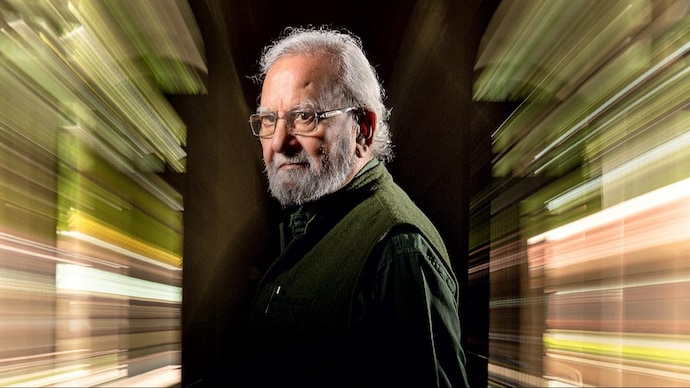
    INTERVIEW | SHASHI THAROOR

"The race is winnable"

Shashi Tharoor, 50, currently UN under-secretary-general, is India's nominee for the post of UN Secretary-General. He spoke to Managing Editors Raj Chengappa and Shankkar Aiyar about his prospects. Excerpts:

Q. Will nominating you to the secretary-generalship diminish India's chances of a permanent seat in the UN Security Council?

A. There is no real connection between the problem of the Security Council seat and my nomination. The world sees that the UN represents the geo-political realities of 1945 and not of 2006. So there has been a feeling for some time that it needs to be reformed and brought up to date. About the permanent seat, the issue has been discussed since 1992, and there hasn't been an agreement on a formula about how much to expand the Council by, whether both permanent and non-permanent categories should be expanded, which parts of the world should be taken. I am sure India will continue its efforts, but the secretary-generalship issue will be over soon.

Q. You were involved with conflict resolution in Bosnia in the early '90s. What went wrong?

A. It was a problem of the UN being thrust into a situation where the Security Council members were divided about both diagnosis and prescription. We tried to do peacekeeping when there was no peace to keep. We wrote a report to the secretary-general in 1992 on the suitability of peacekeeping in Bosnia and said the situation was not right. But the Security Council decided to go ahead as there was no other option.

Q. On the Kashmir issue critics doubt your impartiality and also point out that India has not respected UN resolutions on it.

A. It has been long since Kashmir occupied centrestage at the UN. The issue, as the present secretary-general has said, is being pursued bilaterally. The best thing for the UN would be to applaud the process from the sidelines. So the views of the secretary-general are essentially irrelevant.

Q. Many say that the UN works only when the US wants it to work. And that the UN has basically been reduced to a grumbling windbag.

A. Not really. Often, the contribution of others has been decisive. It's not just about one power. The UN has to work with everyone. The world is full of problems that don't come with passports. Terrorism and weapons of mass destruction are not the only problems-climate change, human rights, refugee movements and drug trafficking go beyond boundaries.

Q. How do you rate your chances?

A. Let's look at the race as winnable and give it our best shot.

Hyde's caution was disregarded and the amendments-described by the India as "deal breakers"-were introduced, though they were rejected by over 30 votes. This may benefit the administration's campaign as it has indirectly addressed the oft-argued point that special exemption to India would stoke nuclear proliferation. Reflecting this sentiment, Democratic Congressman Gary Ackerman said, "If you want to be treated like India, be a responsible international actor with regard to weapons of mass destruction technologies."

The House Committee did, however, insert some amendments, which analysts and Congressional aides here describe as "non-binding" and "procedural". The amendments include greater oversight powers for the Congress and require India to enjoin US efforts to "dissuade, isolate, and, if necessary, sanction and contain Iran for its efforts to acquire weapons of mass destruction, including nuclear weapons capability".

An Indian official described the vote in the House as the " first and most important hurdle" that had been crossed. He clarified that India need not feel pressured by certain US statements prefacing the amendments as they were more in the nature of "sentiments". "It would have no impact on the independence of our foreign policy," he asserted.

The Bush Administration has begun rallying rare bi-partisan support behind its foreign policy initiative. However, it remains to be seen if it is able to go the rest of the way and beat the notional deadline of the upcoming August recess to win the approval of the full US Congress.

 RELATED STORIES
Indo-US Relations: The Bush Visit - A New High
Indo-US Relations: PM's Visit - Big Step Forward


Previous Story

Next Story


Index

INDIA TODAY - The most widely read newsweekly in South Asia.
CURRENT ISSUE
JUlY 10, 2006
 IN THIS ISSUE
COVER STORY

The Art Of The Deal

OTHER STORIES
 

The Centre Cannot Hold

Taking Refuge in Sops

Yesterday Once More

Rude Awakening

"Farmers are happy. Only the politicians are upset."

Why It Crashed

Women On The Warpath

Crossing A Big Hurdle

Eyeball To Eyeball

In Praise Of Imperfection

Lesser Originals

The Bright Angle

Shocked By The Future

Prime Page Turners

Should Indians rejoice over Lakshmi Mittal’s global success?
 
South Asia's most influential and most read newsweekly presents the fifth Conclave India Tomorrow 2006: Bridging the Divide


CONTACTUS SYNDICATIONSSUBSCRIPTIONFAQsPRIVACYPOLICY